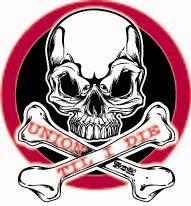
To clarify my opinion of
RIGHT TO WORK.
I am adamantly opposed to any RTW laws..
Please notice the decal picture below.
Millwright Ron
www.unionmillwright.com
Wednesday, January 09, 2013
Friday, December 14, 2012
Do you know the History and where the RIGHT TO WORK law was started?
Do you know the History and where the RIGHT TO
WORK law was started?
“From now on, white women and white men will
be forced into organizations with black African apes whom they will have to call
‘brother’ or lose their jobs."
— Vance Muse, founder of the "right to
work" anti-labor campaign
Labels:
right to work,
RTO,
Unions,
www.unionmillwright.com
| Reactions: |
Tuesday, December 11, 2012
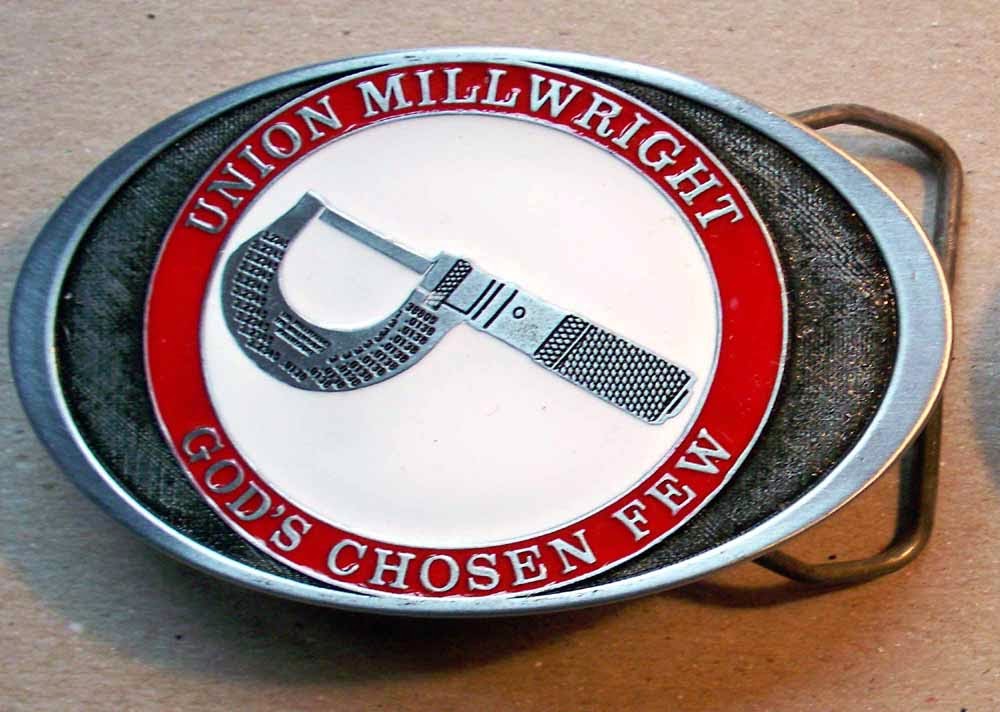
Anti-Union
Democrats and labor leaders went on the offensive against anti-union House Republicans Wednesday, accusing GOP members and business groups of threatening the country's middle class through a raft of legislation that could weaken unions.
At a forum hosted by the AFL-CIO, Sen. Tom Harkin (D-Iowa) argued that Republican efforts to strip power from the National Labor Relations Board, the federal agency that enforces labor law, were part of a broader attack on collective bargaining rights across the country. The fight, he added, was ultimately about "fairness and equity" in the economy.
"We've got to quit being on the defensive," Harkin said. "We have to take our case to the American people ... attacking [Republicans] for what they're trying to do. The American people are starting to understand how unfair the economic system is, how unfair it is for banks and the wealthy to get all the government largesse and for working people to get nothing."
Millwright Ron
www.unionmillwright.com
At a forum hosted by the AFL-CIO, Sen. Tom Harkin (D-Iowa) argued that Republican efforts to strip power from the National Labor Relations Board, the federal agency that enforces labor law, were part of a broader attack on collective bargaining rights across the country. The fight, he added, was ultimately about "fairness and equity" in the economy.
"We've got to quit being on the defensive," Harkin said. "We have to take our case to the American people ... attacking [Republicans] for what they're trying to do. The American people are starting to understand how unfair the economic system is, how unfair it is for banks and the wealthy to get all the government largesse and for working people to get nothing."
Millwright Ron
www.unionmillwright.com
Labels:
decals,
jobs,
millwright,
starrett,
stickers,
union,
work,
www.unionmillwright.com
| Reactions: |
Thursday, December 06, 2012
Are You A Mentor to the trades and To Your Union
The ability to provide assistance creates an environment to promote Brotherhood and Unionism. It is both rewarding and empowering.
Are you a Mentor to your Union Brothers and Sisters?
Millwright Ron
www.unionmillwright.com
The ability to provide assistance creates an environment to promote Brotherhood and Unionism. It is both rewarding and empowering.
Are you a Mentor to your Union Brothers and Sisters?
Millwright Ron
www.unionmillwright.com
| Reactions: |
Wednesday, December 05, 2012
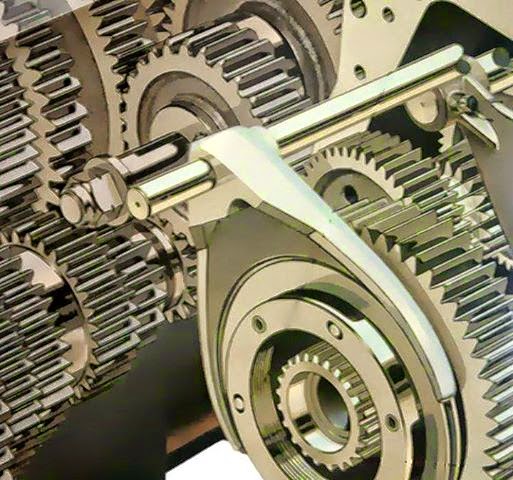
Modern Union Millwrights
Modern Union Millwrights work with their brains as well as with their hands,
Millwrights must be able to read blueprints, assemble machinery, solve
mechanical problems and possess a good technical education in o
rder to be of use
in their vocation.
Technical development and industrial diversification has increased and
compounded the educational skills needed for modern Mil
lwrights. Today this
trade is taught through many years of classroom and on the job apprenticeship
training.
Union Millwrights are always updating and improving their Skills
.
We Are The Future
Millwright Ron
www.unionmillwright.com
Modern Union Millwrights work with their brains as well as with their hands,
Millwrights must be able to read blueprints, assemble machinery, solve
mechanical problems and possess a good technical education in o
rder to be of use
in their vocation.
Technical development and industrial diversification has increased and
compounded the educational skills needed for modern Mil
lwrights. Today this
trade is taught through many years of classroom and on the job apprenticeship
training.
Union Millwrights are always updating and improving their Skills
.
We Are The Future
Millwright Ron
www.unionmillwright.com
Labels:
history,
millwright,
union,
Union Millwright,
www.unionmillwright.com
| Reactions: |
VOC
Dear Brothers and Sisters:
I have had several inquires about how to form a VOC. A Voluntary
Organizing Committee is very easy to set up. You make a motion and have it
seconded. You will need a chair person and a recording secretary. Then ...
I have had several inquires about how to form a VOC. A Voluntary
Organizing Committee is very easy to set up. You make a motion and have it
seconded. You will need a chair person and a recording secretary. Then ...
you
ask for any members that would be interested in joining.
This VOC can be set up for just about any thing that you can think
about. How about setting up a VOC to call members to remind them about the
next Union meeting or how to motivate members to attend your meetings.Use a
VOC to determine what class's that should be taught as a journeyman upgrade.
The options are up for you to decide. Get Involved in your Local.
Peter McGuire believed that a union's strength flowed from its member's
participation. Involvement demands information.
Our Union is only as strong as our participation.
If you know of work. Please pass on the information. If you have news for
Union Millwrights pass that along also.
ask for any members that would be interested in joining.
This VOC can be set up for just about any thing that you can think
about. How about setting up a VOC to call members to remind them about the
next Union meeting or how to motivate members to attend your meetings.Use a
VOC to determine what class's that should be taught as a journeyman upgrade.
The options are up for you to decide. Get Involved in your Local.
Peter McGuire believed that a union's strength flowed from its member's
participation. Involvement demands information.
Our Union is only as strong as our participation.
If you know of work. Please pass on the information. If you have news for
Union Millwrights pass that along also.
Millwright Ron
Labels:
decals,
history,
millwright,
stickers,
union,
voc,
www.unionmillwright.com
| Reactions: |
Corporations post record earnings
A constant conservative charge against President Obama
is that he is inherently anti-business. However, businesses keep defying the
storyline by making larger and larger profits, rebounding nicely out of the
Great Recession.
In the third quarter of this year, “corporate earnings were $1.75 trillion, up 18.6% from a
year ago.” Corporations are currently making more as a percentage of the economy
than they ever have since such records were kept. But at the same time, wages as
a percentage of the economy are at an all-time low
Millwright Ron
Labels:
decals,
millwright,
stickers,
union.work,
wages,
www.unionmillwright.com
| Reactions: |
Monday, December 03, 2012
Do It The Wright Way
Labels:
starrett,
tools,
Union Millwrights,
wages,
work,
www.unionmillwright.com
| Reactions: |
Early Millwrights
Early Millwrights
The word "millwright" has long been used to describe the man who was marked by everything ingenious and skillful.
For several centuries in England and Scotland the millwright was recognized as a man with a knowledge of carpentry, blacksmithing and lathe work in addition to the fitter and erector.
He was the recognized representative of mechanical arts and was looked upon as the authority in all applications of winds and water, under whatever conditions they were to be used, as a motive power for the purpose of manufacture.
In other words, as the above definition would indicate,
he was the area engineer, a kind of jack of all trades who was equally comfortable at the lathe, the anvil or the carpenter's bench.
Thus, the millwright of the last several centuries was an itinerant engineer and mechanic of high reputation and recognized abilities.
He could handle the axe, the hammer and the plane with equal skill and precision.
He could turn, bore or forge with the ease and ability of one brought up in those trades.
He could set and cut in the furrows of a millstone with an accuracy equal to or superior to that of the miller himself.
In most instances, the millwright was a fair arithmetician, knew something of geometry, leveling and measurements, and often possessed a very competent knowledge of practical mathematics.
He could calculate the velocities, strength and power of machines; could draw in plans, construct buildings, conduits or watercources, in all the forms and under all the conditions required in his professional practice.
He could build bridges, cut canals and perform a variety of work now done by civil engineers.
In the early days of North America millwrights designed and constructed the mills where flour and grist were ground by water power.
Water was directed over hand-constructed wooden mill wheels to turn big wooden gears and generate power.
Millwrights executed every type of engineering operation in the construction of these mills.
The introduction of the steam engine, and the rapidity with which it created new trades, proved a heavy blow to the distinctive position of the millwrights,
by bringing into the field a new class of competitors in the form of turners, fitters, machine makers, and mechanical engineers.
Although there was an extension of the demand for millwork, it nevertheless lowered the profession of the millwright, and leveled it to a great degree with that of the ordinary mechanic.
It was originally the custom for the millwrights to have meetings for themselves in every shop.
These meetings usually included long discussions of practical science and the principles of construction which more often than not ended in a quarrel.
One benefit of these meetings was the imparting of knowledge, as young aspirants would frequently become excited by the illustrations and chalk diagrams by which each side supported their arguments.
Millwright Ron
Proud Member Of The Union Millwrights
www.unionmillwright.com
The word "millwright" has long been used to describe the man who was marked by everything ingenious and skillful.
For several centuries in England and Scotland the millwright was recognized as a man with a knowledge of carpentry, blacksmithing and lathe work in addition to the fitter and erector.
He was the recognized representative of mechanical arts and was looked upon as the authority in all applications of winds and water, under whatever conditions they were to be used, as a motive power for the purpose of manufacture.
In other words, as the above definition would indicate,
he was the area engineer, a kind of jack of all trades who was equally comfortable at the lathe, the anvil or the carpenter's bench.
Thus, the millwright of the last several centuries was an itinerant engineer and mechanic of high reputation and recognized abilities.
He could handle the axe, the hammer and the plane with equal skill and precision.
He could turn, bore or forge with the ease and ability of one brought up in those trades.
He could set and cut in the furrows of a millstone with an accuracy equal to or superior to that of the miller himself.
In most instances, the millwright was a fair arithmetician, knew something of geometry, leveling and measurements, and often possessed a very competent knowledge of practical mathematics.
He could calculate the velocities, strength and power of machines; could draw in plans, construct buildings, conduits or watercources, in all the forms and under all the conditions required in his professional practice.
He could build bridges, cut canals and perform a variety of work now done by civil engineers.
In the early days of North America millwrights designed and constructed the mills where flour and grist were ground by water power.
Water was directed over hand-constructed wooden mill wheels to turn big wooden gears and generate power.
Millwrights executed every type of engineering operation in the construction of these mills.
The introduction of the steam engine, and the rapidity with which it created new trades, proved a heavy blow to the distinctive position of the millwrights,
by bringing into the field a new class of competitors in the form of turners, fitters, machine makers, and mechanical engineers.
Although there was an extension of the demand for millwork, it nevertheless lowered the profession of the millwright, and leveled it to a great degree with that of the ordinary mechanic.
It was originally the custom for the millwrights to have meetings for themselves in every shop.
These meetings usually included long discussions of practical science and the principles of construction which more often than not ended in a quarrel.
One benefit of these meetings was the imparting of knowledge, as young aspirants would frequently become excited by the illustrations and chalk diagrams by which each side supported their arguments.
Millwright Ron
Proud Member Of The Union Millwrights
www.unionmillwright.com
Labels:
history,
jobs,
millwrights future,
pictures,
wages,
work,
www.unionmillwright.com
| Reactions: |
Subscribe to:
Posts (Atom)